
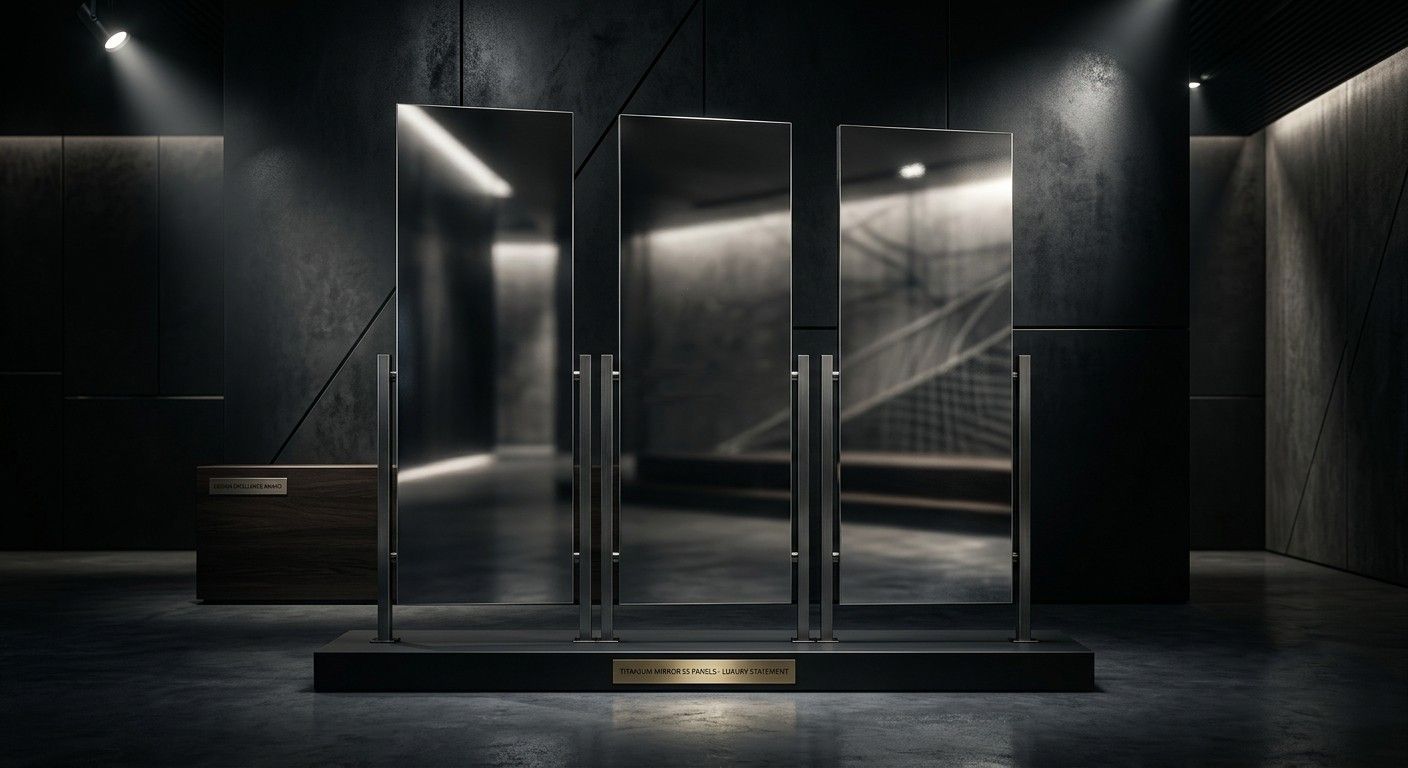
A mirror finish is engineered, not simply polished.
Walk through a luxury hotel lobby, step inside a premium elevator, or look at reflective metal surfaces in an upscale retail store, and there is a good chance you are looking at 8K mirror stainless steel.
Its flawless reflection often makes people assume it is simply polished metal. In reality, achieving a true architectural mirror finish is one of the most demanding surface-finishing processes in stainless steel manufacturing.
Every reflection is the result of carefully controlled grinding, polishing, cooling, inspection and finishing operations that remove even the smallest imperfections from the metal.
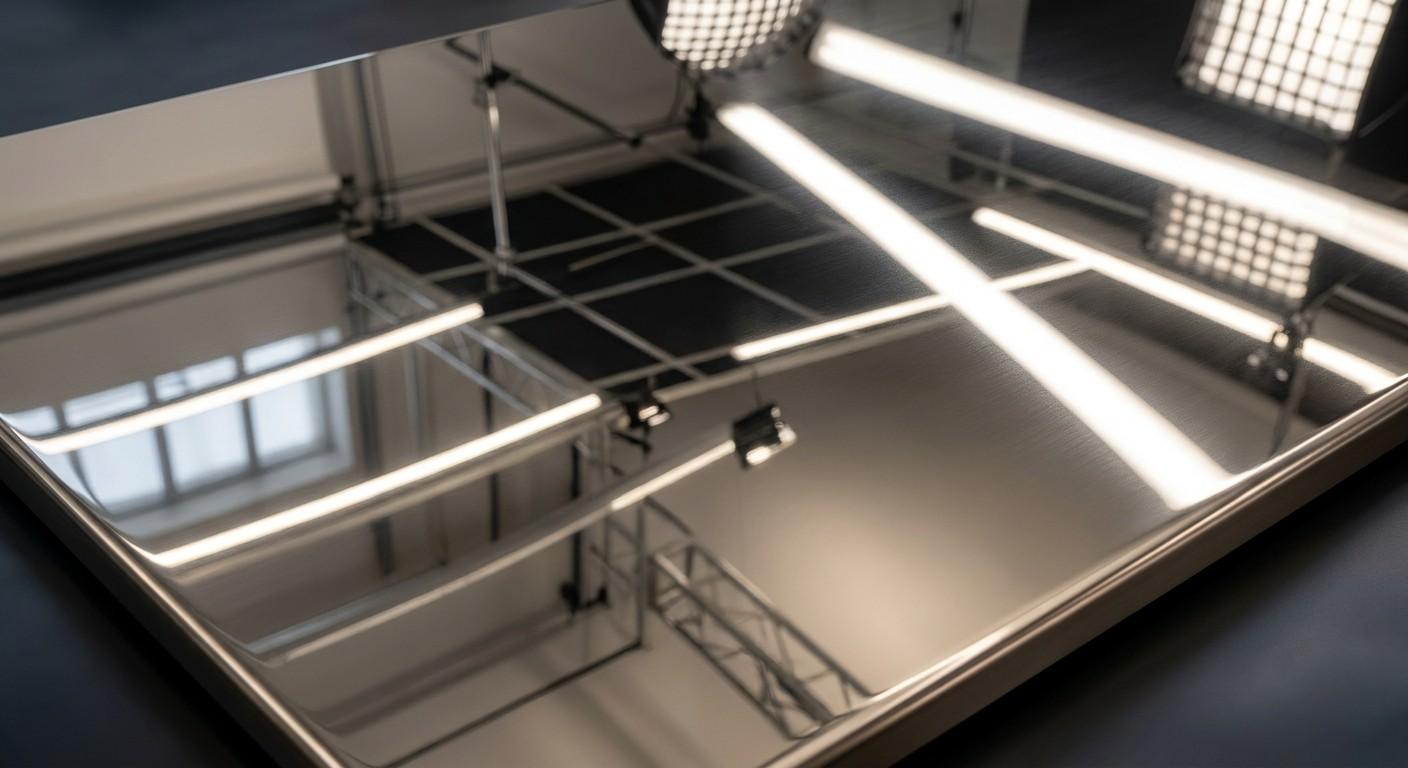
The objective is not merely to make stainless steel shiny. It is to create a perfectly uniform surface where light reflects evenly without distortion—almost like glass—while preserving the strength and durability of stainless steel.
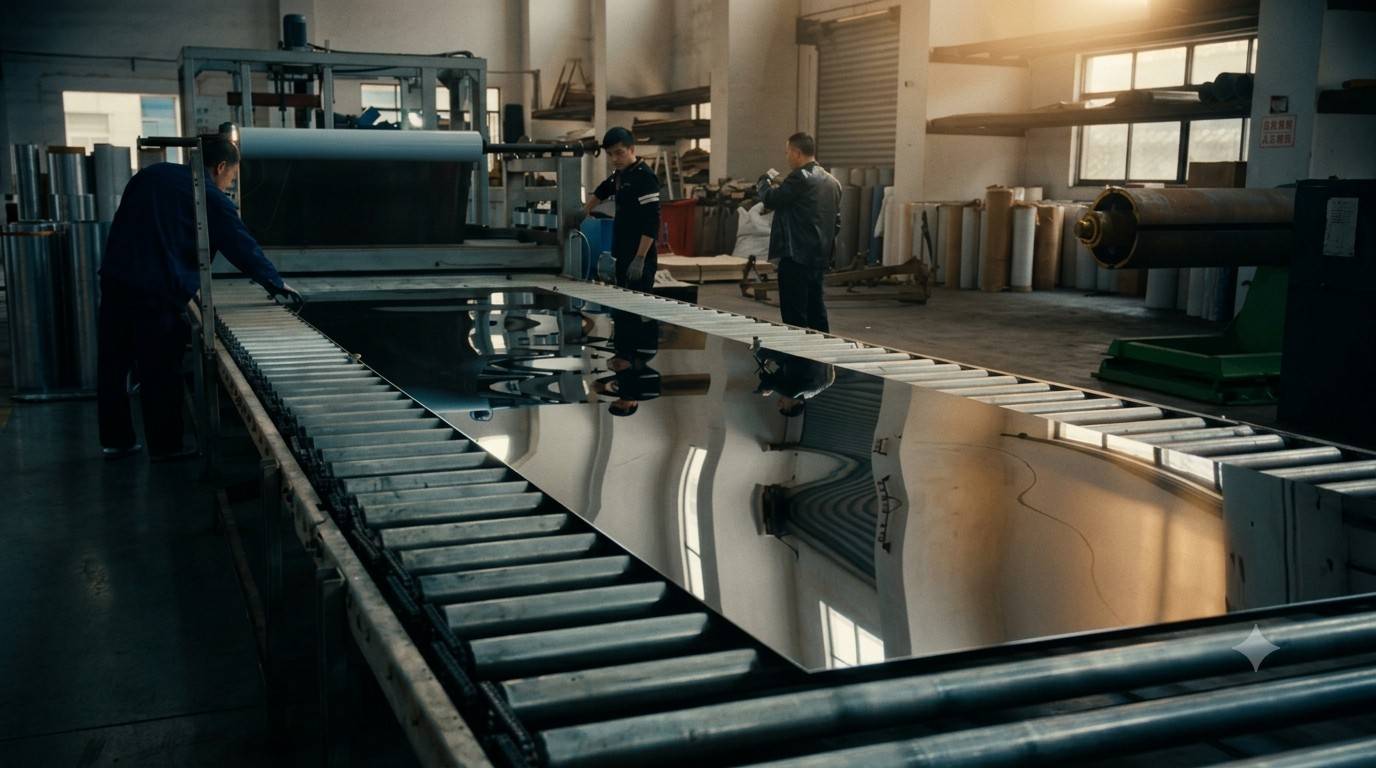
An ultra-high-gloss decorative stainless-steel finish.
8K mirror stainless steel is produced through multiple stages of mechanical grinding and polishing. Unlike brushed or satin finishes, a true 8K surface has no visible directional grain.
The term “8K” does not refer to display resolution. It identifies an exceptionally fine mirror-quality surface. Some manufacturers offer 10K and 12K variants, but 8K remains the most common architectural specification.
Because the finish is created mechanically rather than by applying a film, the natural corrosion resistance of stainless steel remains intact while its appearance is dramatically enhanced.
Seven stages between mill finish and mirror.
Each operation must remove the marks created by the previous stage without introducing new defects.
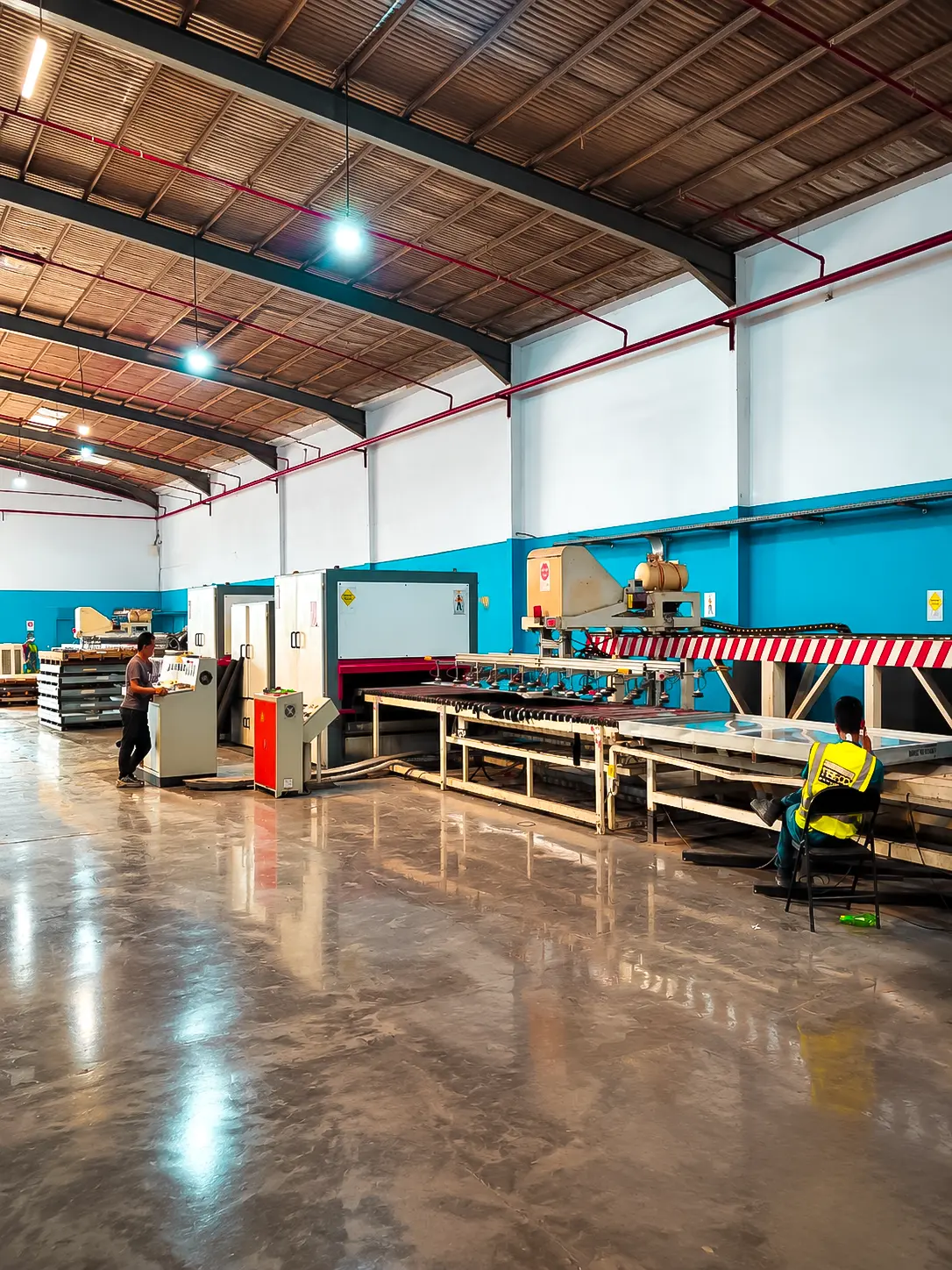
Material Selection
Incoming 304, 316 or selected 430 sheets are checked for flatness, roller marks, dents and deep scratches.
Cleaning & Degreasing
Dust, oil, fingerprints and microscopic contamination are removed before grinding begins.
Precision Grinding
Progressively finer abrasives remove mill marks, oxidation and minor surface defects while building a uniform foundation.
Multi-Stage Polishing
Specialised polishing heads, wheels and compounds refine the microscopic scratch pattern and increase gloss.
Water Cyclic Cooling
Continuous circulation controls temperature, removes residue and helps prevent distortion or surface burns.
Mirror Enhancement
Ultra-fine compounds remove residual haze and improve optical clarity, depth and reflection sharpness.
Inspection & Protection
The sheet is inspected under controlled light, cleaned and protected with removable film before packaging.
Polishing magnifies defects instead of hiding them.
Grinding Builds the Foundation
Every pass reduces surface roughness and removes the scratch pattern left by the previous abrasive.
Heat Must Stay Controlled
Excess temperature can cause haze, discoloration, distortion and inconsistent reflection.
Operators Still Matter
Experienced technicians monitor pressure, vibration, abrasive wear, cooling and reflection throughout production.
The stage where stainless steel becomes a true mirror.
A genuine 8K finish is created through patience rather than speed.
After grinding, the sheet enters polishing stations equipped with soft buffing wheels, cotton, felt, wool or sisal media, and carefully selected compounds.
Each stage has a specific purpose. Operators never attempt to create a mirror in one pass. Every step removes only the marks produced by the previous operation until no visible polishing lines remain.
Increasing pressure or machine speed does not automatically improve quality. Excessive pressure can generate heat, swirl marks or microscopic optical distortion.
Temperature control is part of surface quality.
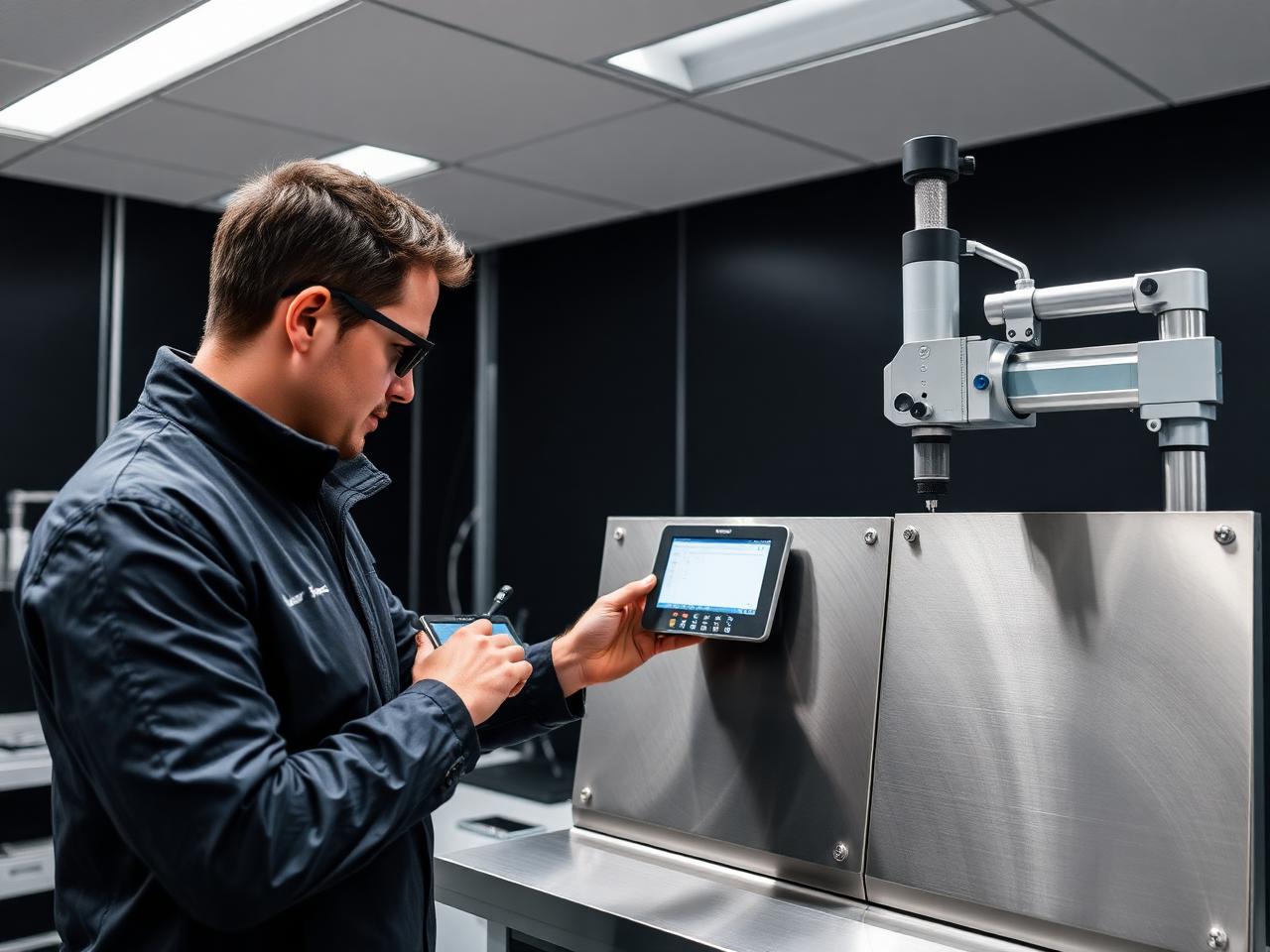
As polishing heads rotate against the surface, thousands of friction points generate heat. A professional water cyclic cooling system continuously circulates water through the production line.
- Prevents thermal distortion
- Improves polishing consistency
- Extends polishing-wheel life
- Removes fine polishing residue
- Reduces the risk of surface burns
- Supports uniform reflectivity across the sheet
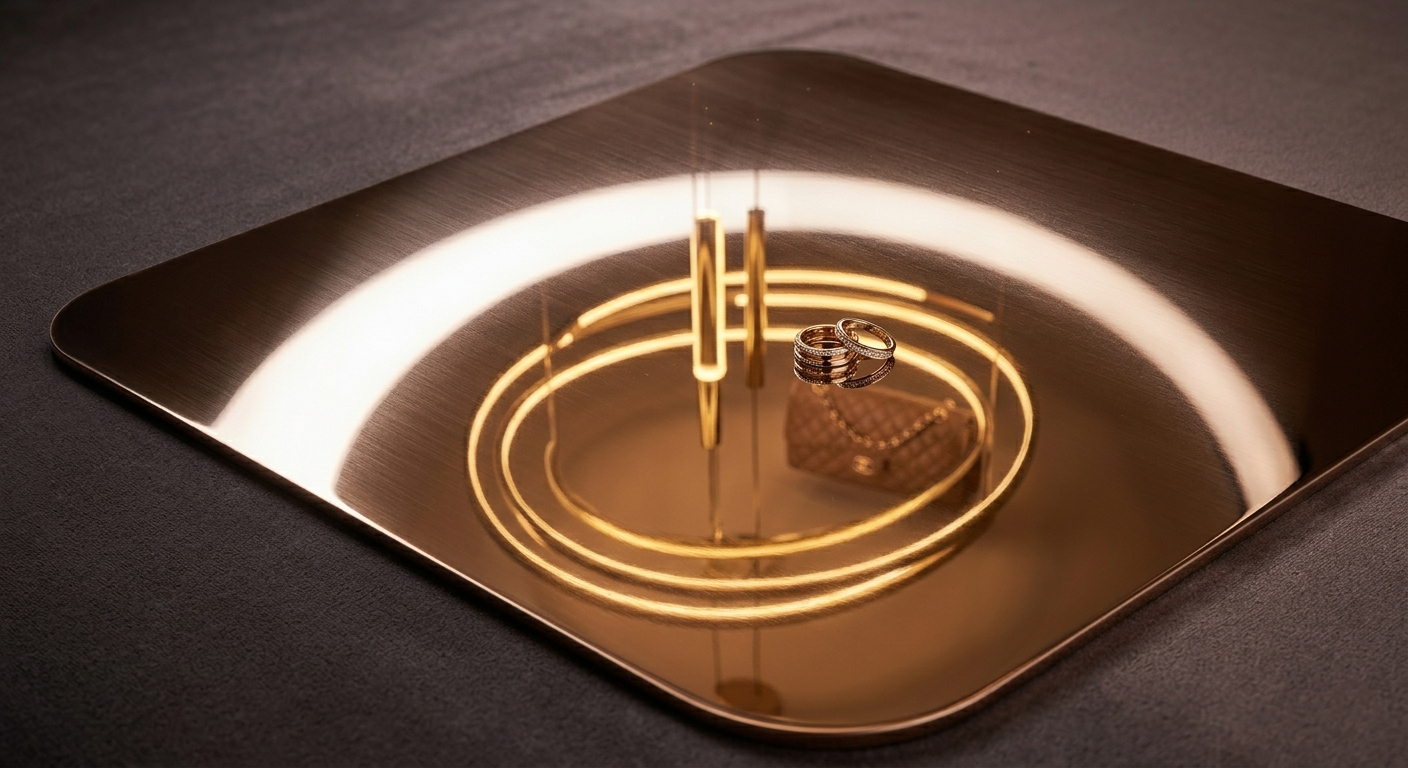
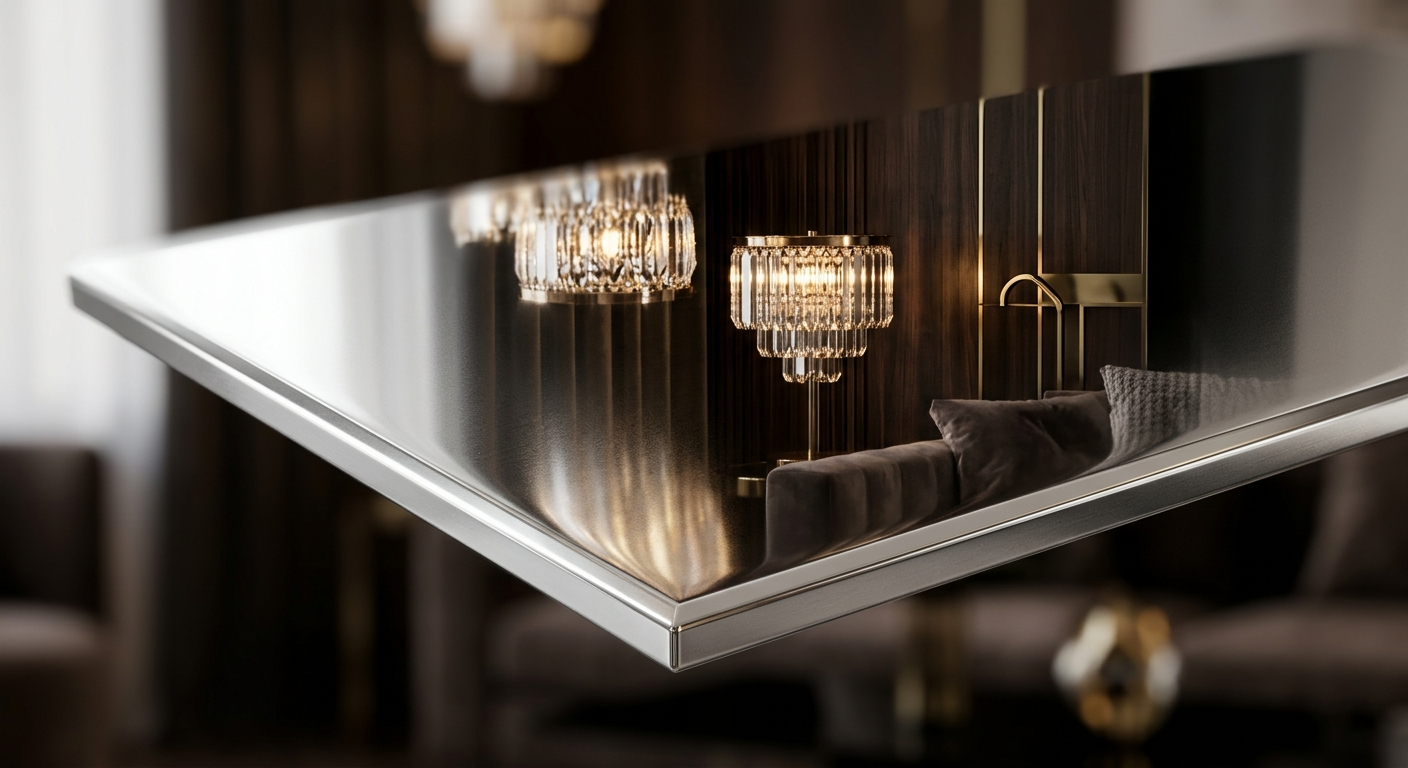
Brightness is not enough. Reflection must remain clear and uniform.
Surface Roughness
Extremely low average roughness helps reflections appear crisp instead of diffused.
Visual Inspection
Inspectors evaluate scratches, swirl marks, pinholes, edge defects, contamination and gloss.
Multiple Angles
Some defects only become visible when light strikes the surface from a specific direction.
The finished mirror must survive fabrication and delivery.
Protective film application
After final cleaning, a removable protective film shields the mirror surface from fingerprints, dust and minor abrasion during fabrication, transport, storage and installation.
The film should remain in place until installation is complete.
Safe packaging
Professional packaging may include separator sheets, edge protectors, moisture-resistant wrapping, reinforced wooden crates or pallets and secure strapping.
For international delivery, humidity, vibration and long transit times must also be considered.
Where 8K mirror stainless steel goes to work.
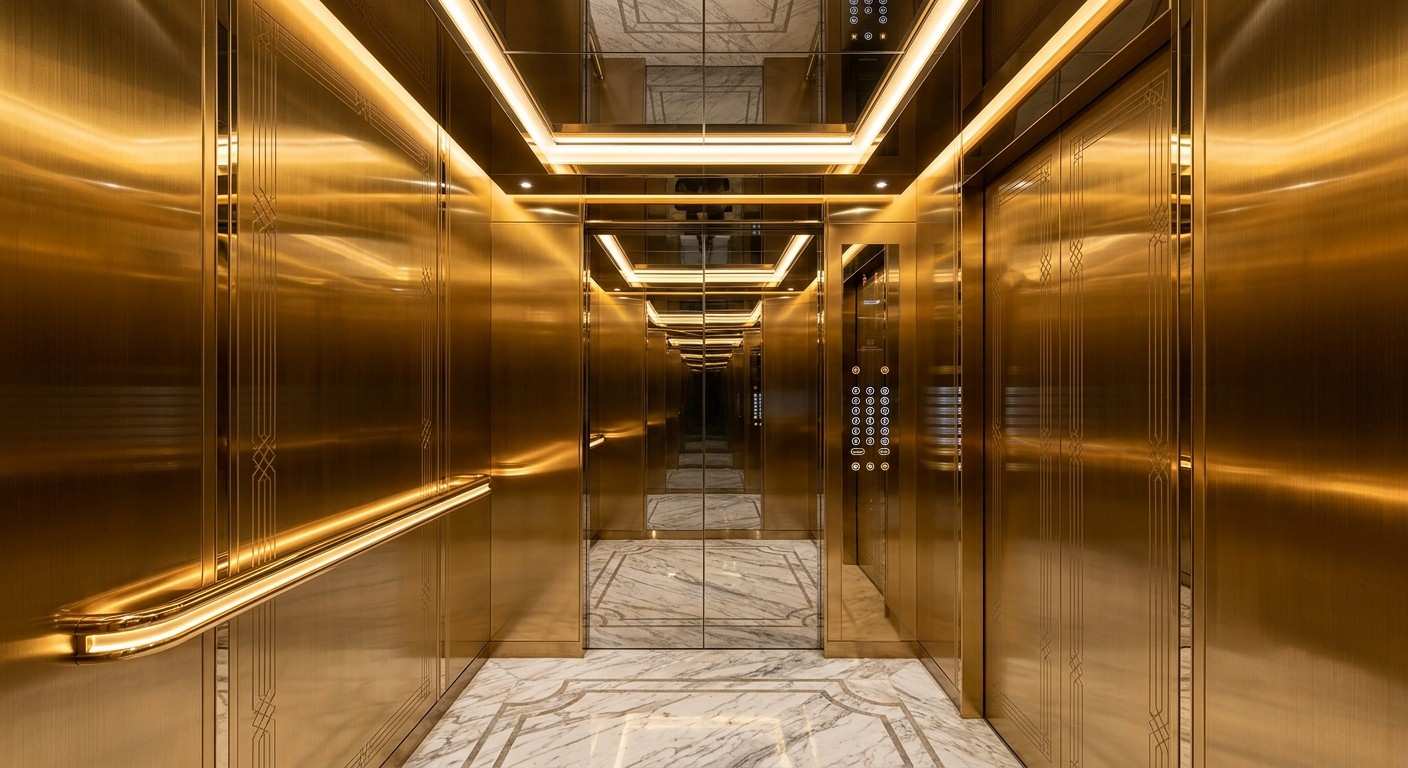
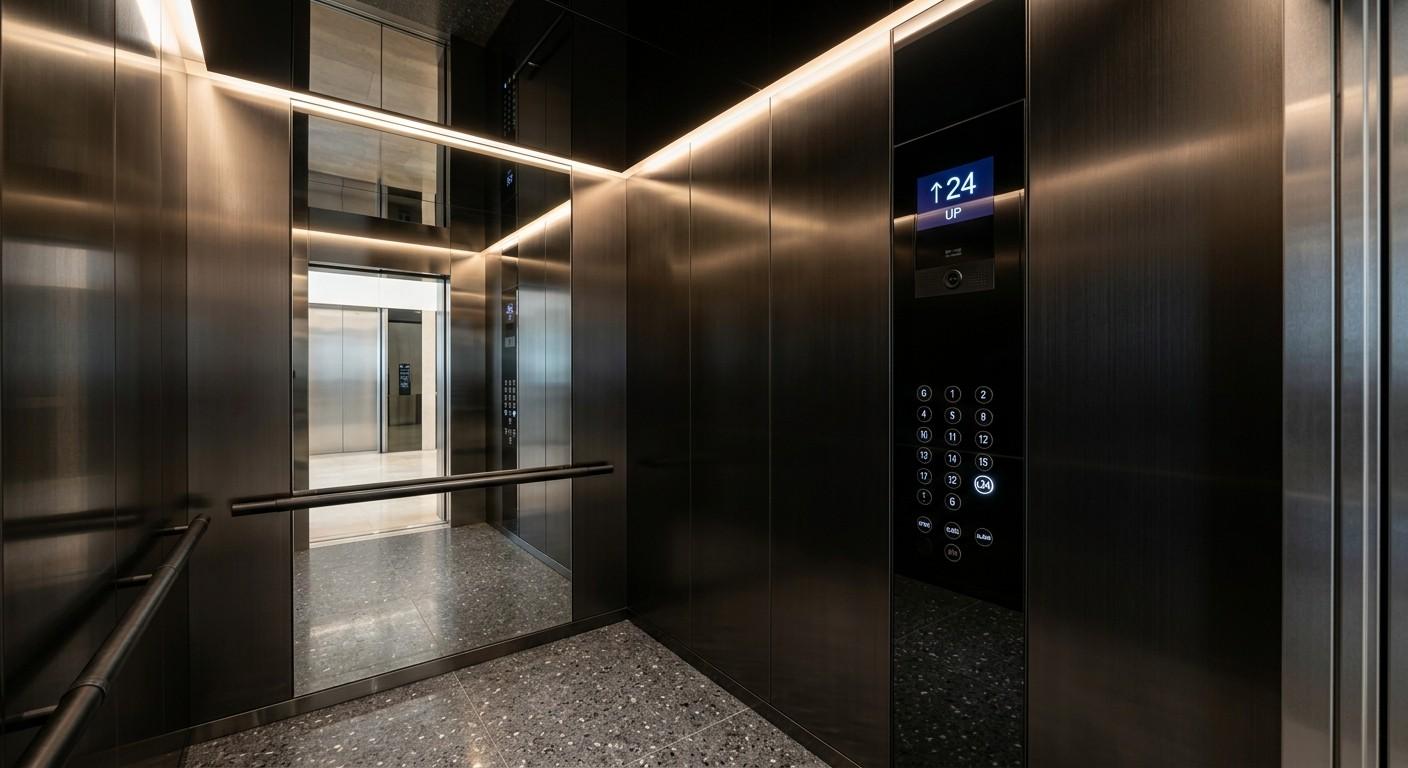
Elevator Cabins
Reflective panels increase the sense of space while offering durable architectural performance.
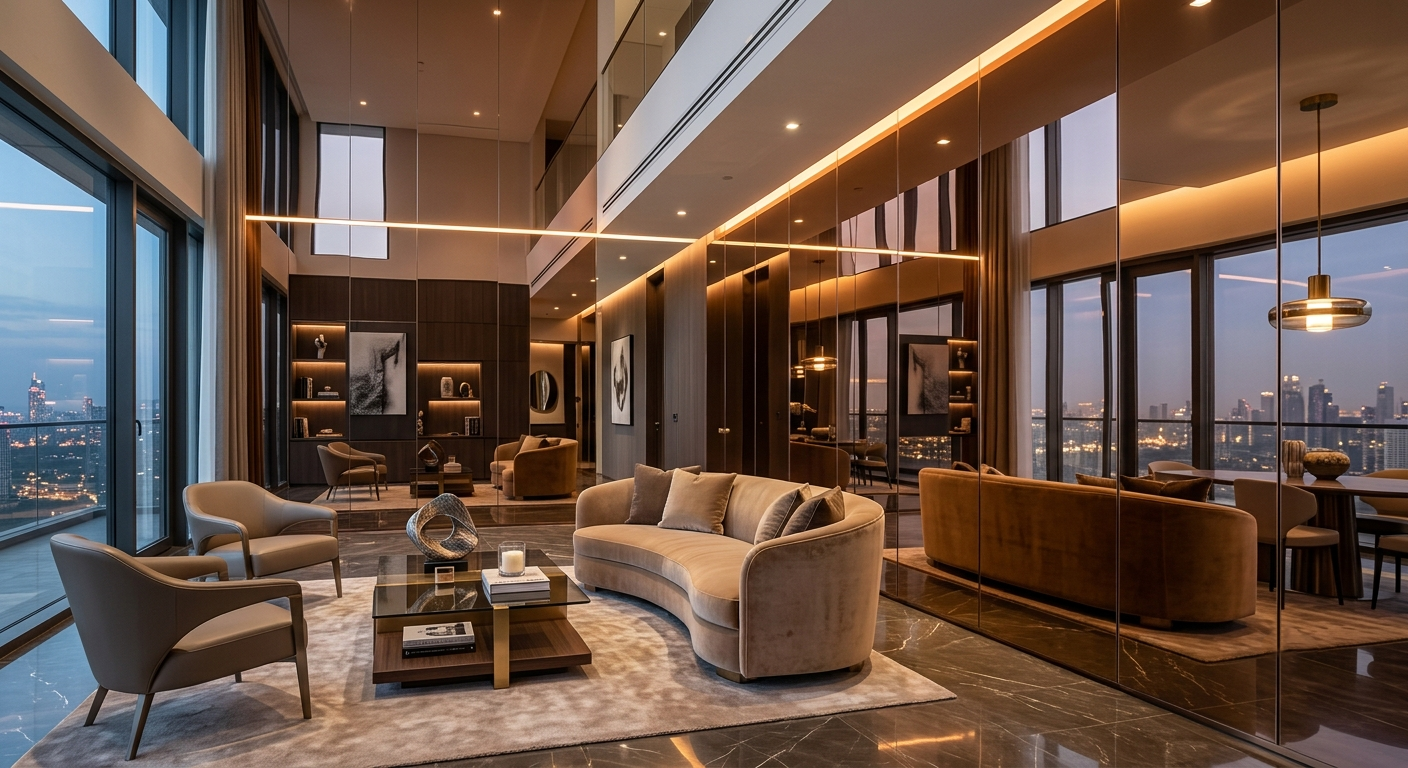
Hospitality & Residential
Used in restaurants, cafés, luxury villas, kitchens, furniture and bespoke interiors.
Decorative Processing
Acts as a base for PVD coating, etching, embossing, water ripple and laser-cut panels.
304 versus 316 stainless steel.
Interior architectural standard
Widely used in hotels, shopping centres, offices, commercial buildings and residences. It offers an excellent balance of polishing performance, corrosion resistance and value.
Higher environmental resistance
Contains molybdenum for improved resistance to chlorides and salt. Often selected for coastal, marine, outdoor and high-humidity locations.
Simple maintenance preserves the reflection.
Recommended
- Use a soft microfiber cloth
- Clean with warm water
- Use a mild pH-neutral detergent
- Wipe gently without excessive pressure
- Dry the surface to reduce water spots
Avoid
- Steel wool
- Abrasive scouring pads
- Strong acidic cleaners
- Chlorine-based chemicals
- Highly alkaline products
Frequently asked questions.
Yes. The mirror appearance is created by mechanically polishing genuine stainless steel rather than applying a reflective film.
No. Because the finish is produced by refining the metal itself, it does not peel like paint or laminated coatings.
Yes. It is commonly used as the base for PVD colours including Champagne Gold, Gold, Rose Gold, Black Titanium, Bronze, Copper and Blue.
Yes, when the correct grade and project-specific protection are selected. Grade 316 is generally preferred for coastal or marine exposure.
Highly polished surfaces show scratches more readily than textured finishes. Protective film, correct handling and gentle cleaning help preserve the appearance.
Progressive grinding, multi-stage polishing and mirror enhancement reduce surface roughness until light reflects with high clarity.
Water cooling controls heat, removes residue, reduces distortion and supports consistent reflectivity.
A true 8K finish provides higher optical clarity, lower surface roughness and no obvious directional polishing grain.
Grade 304 is commonly used for interiors because it offers good corrosion resistance, excellent polishing performance and strong value.
It should remain throughout fabrication, transportation and installation, and be removed after damaging construction activity is complete.
Every reflection reveals the quality of the process behind it.
Producing architectural-grade 8K mirror stainless steel is a controlled manufacturing process combining precision grinding, progressive polishing, cooling, rigorous inspection and meticulous protection.
Every stage builds on the one before it. If even a single operation is rushed or overlooked, the final reflection will reveal those imperfections.
When carried out correctly, the result combines exceptional visual impact with the strength, durability and corrosion resistance for which stainless steel is known.
At Al Samah Teehoo, advanced manufacturing technology and skilled craftsmanship are combined to produce premium decorative stainless-steel solutions for architects, designers, contractors and developers.
Specify the right mirror finish, grade and fabrication solution.
Discuss stainless-steel grades, sheet sizes, 8K mirror finishes, custom fabrication, PVD colours and project requirements with Al Samah Teehoo’s specialists in Riyadh.